Chocolate industry
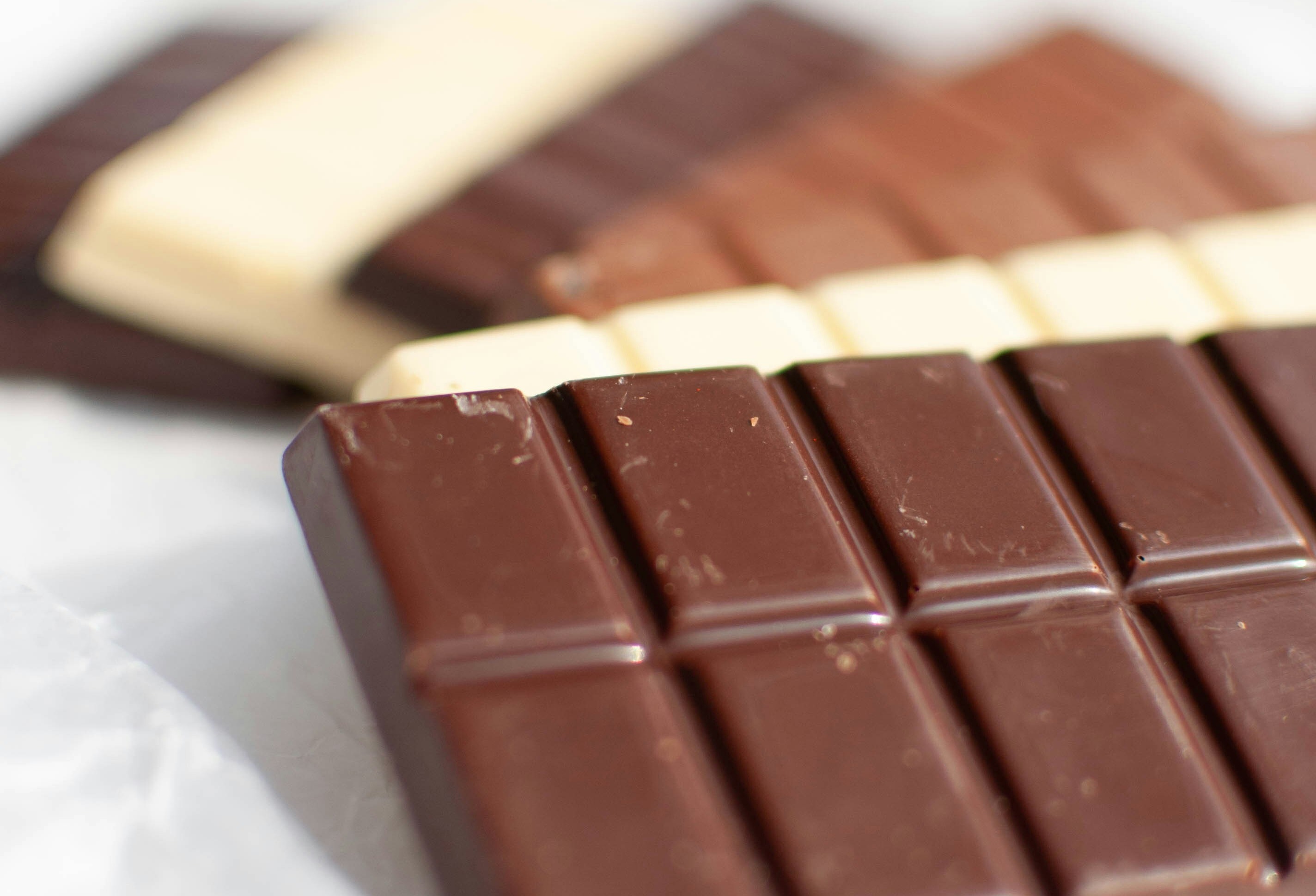
The chocolate industry is one of the world’s largest buyers of dairy ingredients for milk and white chocolate. The right dairy functionality is crucial in this sector. As chocolate is a fat-continuous matrix, the precise choice of dairy ingredient determines the final texture, melting behaviour, mouthfeel and processability during production.
The main functional and technical requirements the chocolate industry places on dairy products, such as whole milk powder, skimmed milk powder, whey powders including demineralised grades, and anhydrous milk fat (AMF), are:
1.Moisture content and water activity
-
Extremely low moisture content: Milk powders for chocolate must contain no more than 3% to 4% moisture.
-
Preventing viscosity problems: Water is the greatest enemy in chocolate production. If milk powder contains too much free moisture, sugar crystals partly dissolve and stick together. This greatly increases the viscosity, or thickness, of the liquid chocolate mass, making it impossible to mould or pump the chocolate.
2. Fat functionality and flow behaviour Rheology
The type of milk fat and how it is present in milk powder largely determine how chocolate flows and melts:
-
Free fat content: Chocolate manufacturers distinguish between roller-dried and spray-dried milk powder. Roller-dried powder has a high free fat content: fat not enclosed within the protein matrix. This free fat mixes directly with cocoa butter, making the chocolate mass more fluid. Less of the expensive cocoa butter is therefore needed to achieve the same fluidity. Spray-dried powder contains less free fat and often requires additional mechanical treatment, such as intensive conching, to release it.
-
Melting point and hardness: Anhydrous milk fat (AMF) is often added to regulate chocolate hardness. Milk fat inhibits cocoa butter crystallisation, making the chocolate slightly softer and allowing it to melt more pleasantly in the mouth.
-
Preventing fat bloom: Milk fat has a useful functional property: it slows the formation of fat bloom, the unappealing white coating caused by temperature fluctuations. The industry requires a consistent fatty acid composition to ensure this stable effect.
3.Mouthfeel - Particle size and powder hardness
-
Fine texture without sandiness: For chocolate to feel silky smooth, particles in the finished product must be no larger than 15 to 30 micrometres. The human tongue perceives particles larger than 30 micrometres as sandy or grainy.
-
Refinability: Milk powder must be easy to grind mechanically using rollers together with sugar and cocoa mass, without clogging the machinery or overheating the proteins through friction.
4. Flavour and colour development Caramelisation
-
Controlled Maillard reaction and caramelisation: For specific chocolate types, such as typical British or American milk chocolate, manufacturers seek milk powders that have undergone mild heat treatment. This produces a subtle caramel flavour through the reaction between lactose and milk proteins.
5. Protein structure
-
Low heat versus high heat: Unlike the bakery industry, which often requires high-heat powder, the chocolate industry usually prefers medium-heat or low-heat milk powder for standard applications. This preserves the proteins’ natural structure and reduces moisture absorption from the environment, improving the stability of liquid chocolate.
Quality is a top priority at Fresena.
As a certified trading company (IFS, GMP+, VLOG and BIO), Fresena safeguards the quality of products throughout the supply chain. Strict selection of suppliers, carriers and other service providers ensures you receive the most suitable product from approved manufacturing sites.

Product overview
For the products listed below, we cater to both the demands of buyers and the offerings of producers—serving sectors including the food industry, the bakery, chocolate, and ice cream industries, the calf milk industry, and the special nutrition industry.
Liquid dairy
Do you have any questions? We are happy to help.
Fresena, your call for dairy
Contact us