Ice cream industry
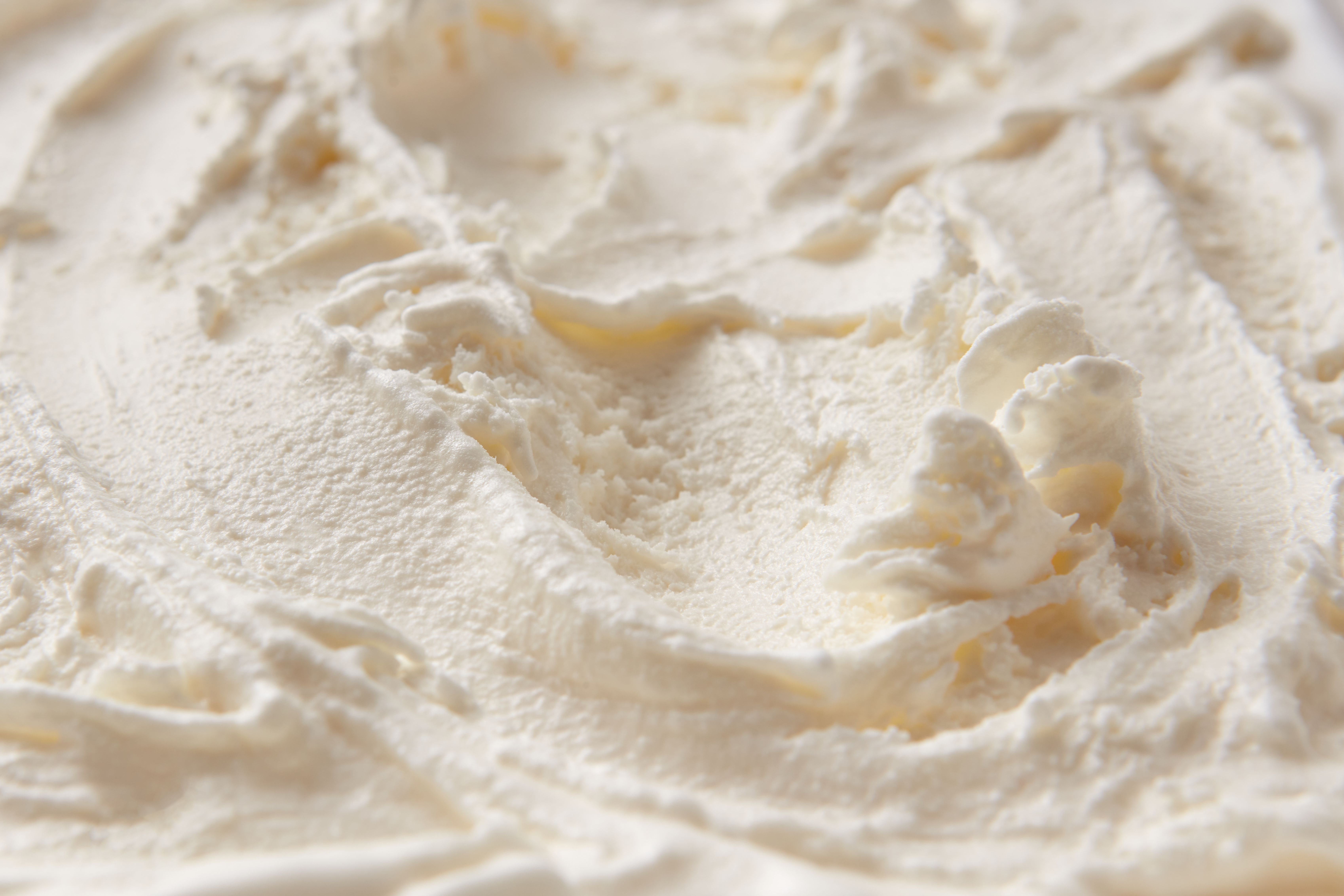
The ice cream industry may place the most complex and delicate functional requirements on dairy products. Technically, ice cream is a highly complex matrix: an emulsion, a foam and a suspension at the same time.
Dairy products such as cream, butteroil, skimmed milk powder, buttermilk powder and whey protein concentrates largely determine whether ice cream is easy to scoop, melts slowly and feels creamy. The main functional requirements are:
1.Control of ice crystals and structure Protein functionality
-
Water binding to prevent ice crystals: Milk proteins, especially casein, must bind large amounts of water. If the ice cream mix contains too much free, unbound water, large ice crystals form during freezing and temperature fluctuations in the freezer (heat shock). This makes the ice cream grainy and icy rather than smooth and creamy.
-
Preventing sandiness (lactose control): Milk sugar crystals (lactose) dissolve poorly at low temperatures. If the milk solids non-fat content (MSNF) is too high, lactose crystallises and gives the ice cream an unpleasant sandy texture. The industry therefore often requires powders with precisely calibrated lactose levels.
2. Air incorporation and stability Overrun
-
Foaming capacity: A large part of ice cream consists of air, known as overrun. Without air, it would be a hard block. Milk proteins must have excellent foaming properties to retain the air incorporated during whipping and freezing in the ice cream freezer.
-
Air bubble stability: Proteins must form an elastic film around air bubbles so they do not merge or collapse during storage and transport, which would reduce the ice cream’s volume.
3. Controlled fat agglomeration and melting behaviour Fat functionality
-
Partial coalescence: This is the key process in ice cream production. Milk fat from cream or AMF must partially cluster during churning and freezing. These fat structures form a three-dimensional network supporting the air bubbles and ice crystals. The industry requires fats with a very specific melting range, the ratio of solid to liquid fat at a given temperature, to form this network successfully.
-
Melting resistance: The fat network prevents the ice cream from immediately becoming a puddle on a warm summer day. It retains its shape while melting slowly in the mouth.
4.Emulsifying capacity the balance between protein and fat
-
Displaced proteins: Although milk proteins are strong emulsifiers, added emulsifiers such as mono- and diglycerides or egg yolk must partly displace them from fat droplet surfaces during mix ageing. Proteins must be flexible enough to allow this interaction, keeping fat stable in the liquid mix but allowing it to destabilise and cluster in the ice cream machine.
5. Flavour viscosity and processability
-
Correct viscosity for the freezing jacket: After pasteurisation and ageing, the liquid ice cream mix must have the right thickness. If incorrectly reacting proteins make it too thick, it will not flow properly through the heat exchangers and the ice cream machine becomes overloaded.
-
Clean, creamy flavour release: Milk fat supports flavour release rather than masking or delaying it. The industry requires dairy powders and fats to be completely free from oxidised, rancid or cardboard-like flavours, as these immediately spoil the delicate taste of vanilla or strawberry ice cream, for example.
Quality is a top priority at Fresena.
As a certified trading company (IFS, GMP+, VLOG and BIO), Fresena safeguards the quality of products throughout the supply chain. Strict selection of suppliers, carriers and other service providers ensures you receive the most suitable product from approved manufacturing sites.
Product overview
For the products listed below, we cater to both the demands of buyers and the offerings of producers—serving sectors including the food industry, the bakery, chocolate, and ice cream industries, the calf milk industry, and the special nutrition industry.
Liquid dairy
Do you have any questions? We are happy to help.
Fresena, your call for dairy
Contact us